

What is Drop In Anchor
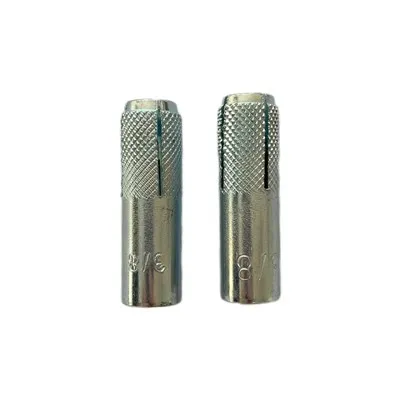
Drop-in anchors are mechanical fasteners designed to provide a secure anchoring point within concrete, masonry, or other solid substrates. Comprising a threaded internally threaded expansion shield and a setting tool, these solutions offer unparalleled versatility and strength for various construction applications.
Benefits of Drop In Anchor
Superior Load Capacity
One of the primary benefits of drop-in anchors is their exceptional load-bearing capacity. By securely embedding them into the substrate, drop-in anchors provide a robust anchoring point capable of withstanding substantial loads, which makes them ideal for heavy-duty applications.
Corrosion Resistance
Drop-in anchors are available in various materials, including stainless steel and zinc-plated steel, offering superior corrosion resistance in challenging environmental conditions. Their corrosion resistance ensures long-term durability and reliability, even in harsh outdoor or industrial settings.
Easy Installation
Drop-in anchors are also renowned for their simplicity and ease of installation. The process typically involves drilling a precise hole in the substrate, inserting the anchor, and setting it with a setting tool. Their straightforward installation reduces labour costs and minimises construction time, enhancing overall project efficiency without compromising on reliability.
Simplified Upkeep
In scenarios where fixtures need to be repositioned or replaced, drop-in anchors offer the convenience of removability. By loosening the anchor bolt, the anchor can be extracted from the substrate without causing damage, facilitating ease of maintenance or renovation activities without affecting structural integrity.




Why Choose Us
Professional team
We have a team of skilled and experienced professionals who are well-versed in the latest technology and industry standards. Our team is dedicated to ensuring that our customers get the best service and support possible.
Competitive prices
We offer our products at competitive prices, making them affordable for our customers. We believe that high-quality products should not come at a premium, and we strive to make our products accessible to all.
Efficient and convenient
The company has established marketing networks around the world to provide high-quality services to customers in an efficient and convenient manner.
Quality assurance
In terms of quality assurance, the company strictly follows the standards and norms of the industry quality system. Adopt industry-leading testing equipment to ensure product quality and good reputation.
High quality products
We always put customer needs and expectations in the first place, refine on, continuous improvement, to seek every opportunity to do better, to provide customers with their expectations of quality products, to provide customers with the most satisfactory service at anytime.
Customer satisfaction
Providing after-sales services can enhance customer satisfaction by ensuring that customers' needs are met even after the purchase. This can lead to increased customer loyalty and positive word-of-mouth referrals.
8 Concrete Drop-in Anchor Applications
Mount Shelving and Cabinets
They provide the necessary support for heavy items on walls, such as shelving units, wall-mounted cabinets, and bookcases, so that they stay securely in place.
Secure Handrails or Grab Bars
Drop-in anchors are commonly used to attach handrails or grab bars in areas like stairways, bathrooms, or outdoor steps to help ensure stability and safety.
Install Wall-Mounted TVs
For heavy flat-screen TVs, anchors can provide a secure mount to hold the weight and minimize the risk of the TV pulling free from the wall.
Hang Outdoor Fixtures
They're used to securely hang or mount outdoor fixtures such as lighting, signs, or decorative elements on exterior concrete walls or posts.
Attach Structural Supports
This includes the installation of supports for carports, pergolas, or decking, where a strong anchor is required to maintain structural integrity.
Secure Heavy Appliances and Furniture
To prevent tipping, heavy items like free-standing shelves, workbenches, or home gym equipment can be anchored to the concrete floor in garages or basements.
Install Garage Door Openers
Drop-in anchors are used to securely attach the bracketry of garage door openers to the concrete ceiling of garages.
Mount Electrical and Plumbing Fixtures
This includes securing conduit straps, junction boxes, and plumbing fixtures in utility areas.
Technical Specifications for Drop-In Anchors
Length
When setting the anchor flush with the base material: To determine the minimum bolt length required, add the internal thread length of the anchor, plus the thickness of the material to be fastened, plus the thickness of any washer to be used.
When setting the anchor deeper into the concrete
Determine the minimum bolt length above and add the additional depth to the minimum anchor length.
Spacing
The forces on a Drop-in Anchor are transferred to the material in which it is installed. If the anchors are installed too close together, it can cause an interaction of the forces, thus reducing their holding power.

How to Install Drop in Anchors: 10 Steps
Prepare the equipment. To get started, you need to have the anchor and the adequate masonry drill bit. The drop in manufacturer should list the exact size hole you need to make to install the anchor on the anchor box.
Adjust the drill bit depth. The adjustment should be based on the hole you need to drill (after doing your research on depth). The depth should be adjusted on the hammer drill. Mark the area on the drill bit at the exact point you need to stop drilling, in order to drill an accurate hole. You can use a piece of tape on the drill bit to mark this.
Switch your hammer drill to "drill mode". The default mode will be "drill mode". With certain drills, you won't need to do this.
Put on your protective gear. At this stage, you're getting ready to drill and you should protect your eyes, ears, and hands adequately. You need to wear protective equipment before you start drilling.
Start drilling in the marked point of the concrete. Keep drilling until you reach the required depth. The marking on the drill bit should indicate where you need to stop. Use the hammer drill to create a hole using a carbide drill bit. The drill bit size required should be listed on the drop in anchor box or on the manufacturer’s website.
Clean out the hole. This is done to remove any debris from the area. Use a blow tube or blow bulb to blow debris out of the hole. Blow a second time and make sure the hole is fully cleared of debris. Insert the setting tool in your hammer drill and hammer until the set tool and the anchor shoulder meet.
Start the anchoring process by dropping the anchor inside the hole. Make sure the opening of the anchor is facing the exit.
Take your drop in anchor setting tool and insert it at the top of the anchor. Proceed to hammer down on it until your setting tool touches the top of the anchor or until it moves no further forward. The anchor should be fully secured in the hole.
Once the anchor is secured, you can start attaching your fixtures to the concrete.
Insert a threaded rod or bolt into the fixture. This is the final step once the fixture is over the drop in anchor.
Drop-In Anchors Market Analysis and Latest Trends
Drop-In Anchors are mechanical devices used to secure objects to a variety of base materials such as concrete, masonry, or other solid surfaces. They are widely used in construction and manufacturing industries for applications where a strong and durable anchoring solution is required. Drop-In Anchors typically consist of a cylindrical body with internal threads and a lip on top that prevents the anchor from falling further into the hole during installation.
The Drop-In Anchors Market is expected to witness significant growth in the coming years. The increasing infrastructure development activities around the world, especially in emerging economies, are driving the demand for drop-in anchors. Moreover, the growing construction industry, both residential and commercial, is further fueling the market growth.
Another key trend in the Drop-In Anchors Market is the increasing adoption of technologically advanced solutions. Manufacturers are focusing on developing innovative drop-in anchors with improved design and features to enhance their performance and efficiency. For instance, the emergence of drop-in anchors with pre-sized holes and built-in installation aids simplifies the installation process, reducing time and effort.
The market is witnessing the introduction of drop-in anchors made from lightweight materials, such as stainless steel or carbon steel, to cater to the lightweight construction applications. These anchors offer high strength and corrosion resistance, making them ideal for various weather conditions and environments.
The Drop-In Anchors Market is expected to exhibit significant growth in the coming years, driven by infrastructure development and the construction industry's expansion. The market is also witnessing the adoption of advanced solutions and lightweight materials to enhance performance and cater to specific application requirements. The projected CAGR of % during the forecast period indicates the positive growth prospects for the market.
Types of Drop-In Anchors
Drop-In Anchors come in various forms, each tailored to specific needs:
Standard Drop-In Anchors
Sets flush to the surface, commonly available in sizes M6 to M20. Dependent on hole depth to determine concrete embedment.
Lipped Drop-In Anchors
The lipped collar prevents the anchor sleeve from slipping in to the drilled hole. Also suitable for Hollow substrates. Commonly available sizes are M10 & M12.
Shallow Drop-In Anchors
Ideal for applications where a shallow concrete embedment is preferred, also suitable for Hollow substrates. Commonly available sizes are M10 & M12.
Stainless Steel Drop-In Anchors
Manufactured entirely from stainless steel, suitable for outdoor or other corrosive environments.

To install the anchor, a professional drops the anchor in the previously drilled hole with the threaded open end facing the surface. Then using a drop in anchor set tool, he sets the anchor by driving the internal wedge deep into the anchor.
Similar to other female anchors, the specific drop in anchor size serves as a reference for the internal thread diameter of the anchor. This is the size of the hardware or bolt used to attach appliances.
The measured outside diameter has to be equal to the hole diameter that you're going to drill into the concrete.
The length of the drop in anchor is essentially the minimum embedment of the diameter.
The bottom of the hole is used to set the anchor.
It may take you a while to obtain the necessary tools in order to secure handrails, machines, overhead hangers, lights, and more to the anchors.
Most drop in anchors are suitable for heavy-duty fastening.
Drop-In Anchor Vs Concrete Screws
Drop-in anchors are specifically designed for use in concrete and provide a permanent fixture. They have a metric head that makes the drop-in anchor the most popular fastener for overhead applications, such as installing threaded bar to concrete ceilings or hanging cable trays. The metric head allows you to install items without needing any other tools, and the metric head can be re-used to help apply other installations. The design and the expansion of the anchor also means that the drop-in anchor allows for a small drill hole and low anchorage depth.
The anchors can come with or without a lip. The lip prevents the anchor from falling further than is necessary into the drill hole, while no lip means the anchor will be flush with the surface. This flush means that although the drop-in anchors cannot be removed, the hole and fixing can easily be filled in.
Although the drop-in anchor is relatively easy to install, with just a drill, blow out the hole, and a hammer, you will need to make sure that you have an appropriate setting tool, and the process can be tiring work especially when installing overhead.
The company started to set foot in the fastener industry in 1999, mainly engaged in expansion bolt products. In 2005, the company built its own factory building, covering an area of about 1,000 square meters, and put into operation the first batch of expansion bolt production equipment, and Taihang standard parts were formally established. In 2010, the company's Taihang series of brand products have been sold all over the country, with partners in major cities, and the sales network has begun to take shape. In the same year, the company developed and established a branch factory, and Shuanggu Fastener Factory was established. In 2015, the company developed rapidly, and built a new factory of 15,000 square meters in Mingyang Village Industrial Zone, added more than 60 sets of equipment, integrated production resources, and established Handan Darun Fastener Manufacturing Co., Ltd.

FAQ
As one of the leading drop in anchor manufacturers in China, we warmly welcome you to buy cheap drop in anchor made in China here from our factory. All expansion bolt products are with high quality and low price.